
Home

Program Overview


Outdoor Science Field Trips "Delivered" to Local Schools

Program Summary

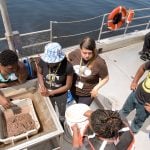
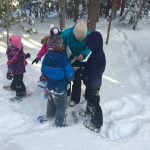
The Western Upper Peninsula Center for Science, Mathematics and Environmental Education conducts outdoor field trips for grades K-12 in 19 school districts in Houghton, Baraga, Gogebic, Ontonagon and Keweenaw counties. Each fall, winter and spring, teachers receive a letter inviting them to request a 1-2 hour field trip program led by a trained naturalist/science educator. Two seasonally-appropriate activities are available for each grade. These field trips enhance classroom learning by providing real world applications for math and science concepts taught in the classroom. All activities are correlated to Michigan Content Standards for Science, Mathematics, and Social Studies so that the field trip can be easily integrated into the curriculum. Using the outdoors allows students to utilize many science and math skills, including observing, predicting, data collecting, and graphing. The field trips are conducted at parks, natural areas, school forests and even the school yard, all conveniently located near each school. This program began in the spring of 2000 and has been enthusiastically received by teachers and students. Participants numbers continue to grow each year.  During the 2004-05 school year, 3,012 students from eighteen schools participated in 158 field trips.

Need Addressed   

The Center’s field trip program addresses many critical needs of area school districts. Districts in the Western Upper Peninsula are very rural and isolated, and there is limited access to nature centers with staff and a regular menu of programming. Students also have limited opportunity to meet with real scientists. In addition, many elementary and middle school teachers are reluctant to conduct field trips with their class for several reasons. Teachers may not feel knowledgeable enough, or lack time to identify an appropriate field trip site, or lack experience finding and conducting appropriate outdoor activities with large numbers of students.  Teachers help conduct the field trips, but they are not responsible for the entire program. 

The field trip program is a vehicle to get students outside the four walls of the classroom. The program engages students in observation, exploration, data collection and analysis, as well as, provides a context for learning about a variety of topics, including: forest management, wetland values, biodiversity, wildlife management, ecosystems, stewardship, soils, insulating qualities of different fabrics, moisture content of snow, wind chill, and heat loss.

Innovative Aspects   

Many Math and Science Centers, and some schools, dream of having their own “nature center” where K-12 students can come for special enrichment classes. However with past and ongoing budget woes, the goal of purchasing acres of forests complete with a stream or pond, and constructing and maintaining a classroom building and lab space will likely never be realized by most. This is why the Western UP Center developed this novel approach to providing students with outdoor learning opportunities. Now, rather than raising hundreds of thousands of dollars for construction, maintenance, and operations, the Center instead hires one person and allocates three-quarters of her time to conducting this field trip program.

Not only is this approach economical and practical for the Center, it is also more economical and practical for participating schools. Students need not be bussed long distances to a “center,” instead the field trip is conducted at the schoolyard or at appropriate site close to the school---such as city and county parks, national forest or national park land, or The Nature Conservancy or Michigan Nature Association preserves. This approach greatly minimizes the time and expense of field trips, and has the added benefit of introducing students to habitats near their communities. Given the large geographic size of the Western U.P. Center’s service area (100 miles square), the Center reaches far more students using this model, than if we required all students to travel to one location 50-100 miles from their school.

Evidence of Success  

The number of teachers and students participating in the field trip program, and the number of schools served across this five county area, has significantly grown since the first 3-week pilot program conducted in May 2000.  After each field trip, teachers are given an evaluation form to assess the program.  One question on the form asks, “Did the field trip stimulate further scientific thought from students?”  One teacher observes, “My students were very interested and looked at many different plants and seeds that they normally would not have.” Additional teacher comments include, “The field trips provided students with an opportunity to collect info and make decisions based on the data” and “Lisa’s questionsstimulated students to think about spiders and fungi, how they affect the environment.” 

Other teacher evaluation comments indicate that a lot of discussion takes place in the classroom after the field trip to reinforce the new information. A teacher states, “We discussed what we learned, and we discussed stewardship of our forest lands.”  Another teacher says, “The following day at recess, the students were identifying leaves. They were also stating how they were using their senses.”  These comments from teachers point out that learning does not stop at the end of the field trip program but is carried to classroom discussions, at-home family conversations and continued outdoor discovery.

Annual Student & School Participation

School Year

Number of Student Participating

Number of Field Trips

Number of Schools

1999-2000

425

20 (May ‘00 only)

8

2000-2001

793

21 (fall only)

9

2001-2002

2,389

74 (fall, winter, spring)

15

2002-2003

2409

96 (fall, winter, spring)

14

2003-2004

2326

113 (fall, winter, spring)

19

2004-2005

3,012

158 (fall, winter, spring

18

2005-06

3,084

96 (fall, winter, spring)

24

2006-07

2,668

113 (fall, winter, spring)

22

2007-08
2, 239
109
18

school year.  Number of students participating: ; Number of Field Trips: ; Number of Schools:

Resources Used  

The Western UP Center has received grants to assist with program costs from the Wege Foundation, U.S. Environmental Protection Agency, National Community Service (AmeriCorps), and Section 99 of the School Aid Act.  The naturalist/science educator coordinates all aspects of the program, including design of age-appropriate activities for all grades during three seasons; scheduling field trips with teachers; identifying appropriate teaching sites; providing supplies, conducting field trips, and summarizing evaluations. She utilizes effective teaching strategies and models the wonder and curiosity that we hope students will embrace and carry into their high school science classes.

The total cost of the program is the sum of the field trip coordinator/educator’s part-time salary, travel to field trip sites, and teaching supplies. The schools pay the cost of transporting their students to the field trip site. Since Fall 2005, the schools are charged $20 per field trip (plus $5 per additional field trip at the same location on the same day) to help defray the Center’s travel expenses to sites spread across a 100-square mile area.


Last Update: 9/3/2008
For more information contact:

Joan Chadde at jchadde@mtu.edu or 487-3341.

This web site has been optimized for faster internet loading speed, formatted for page-width printing and tested for most platforms and browsers.
If you have any problems or comments, contact the webmaster.
Email Webmaster ehgroth@mtu.edu