
Western Upper Peninsula Center for Science,
Mathematics and Environmental Education
2000-2001 Annual Report
![]()
The Western Upper Peninsula Center for Science, Mathematics and
Environmental Education, has offices in the Copper Country Intermediate School
District and on Michigan Technological University’s campus. The center provides
services to 21 school districts and their communities in Baraga, Keweenaw, Houghton, Ontonagon and
Gogebic counties. The center strives to develop scientifically literate and
environmentally committed citizens, scientists and community leaders for the
21st century by providing innovative and quality programming for students, teachers
and the community.
Ø
13,547
students participated in the center’s programming.
Ø
428
teachers participated in 6423 hours of professional development offered by the
center.
Ø
Conducted
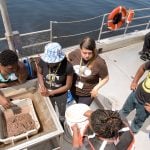
a 3 day Lake Superior Youth Symposium for 400 teachers and students in
Wisconsin, Minnesota, Michigan and Ontario.
Ø
Implemented
a School Forest Teacher Training Initiative, which provided knowledge and
resources to integrate the school forest into the curriculum.
Ø
200
students in grades 4-9 participated in the Western UP Science Fair.
Ø
2380
students and parents participated in Family Science and Math Night Programs
Ø
Implemented
the Educator’s Science and Mathematics Institute Series to help teacher s
develop standards based classroom teaching units.
Ø
115
classroom presentations, assemblies and field trips involved 5350 students.
Ø
Placement
and training of 13 graduate students in 11 school districts to assist teachers
in curriculum
alignment and development.
This report is organized around the Western Upper Peninsula Center for Science, Mathematics and Environmental Education Three-Year Strategic Plan for 2000-2003. The Strategic Plan identifies six service areas: Leadership, Professional Development, Student Services, Curriculum Support, Community Involvement, and Resource Clearinghouse. In each service area—the goals and quality indicators are described. Descriptions of strategies used to accomplish these goals and indicators of the effectiveness of the work are also presented.
1. The center will influence policy for mathematics and science
education in the region, state and nation, by actively participating in the
Michigan Mathematics and Science Centers Network.
2. The
center will exert leadership in coordinating educational activities in the
CCISD and GOISD and provide services that meet the needs of teachers and
students in the service area.
3. The center will provide leadership for schools in the CCISD and GOISD by participating in State Wide Initiatives to improve mathematics and science education.
Strategies:
Ø Center staff gathered input
and assess needs of school districts using many strategies both formal and
informal.
Ø Center staff worked
collaboratively with community organizations, various departments at Michigan
Technological University and school districts to coordinate programming and
leverage resources.
Evidence:
|
·
Information from the
formal needs assessment was used to develop the three year strategic plan for
center programming · The center was able to obtain funding and resources to enhance programming. |
Professional
development programs addressed a need for strategies to engage students in
inquiry-based activities using higher order thinking skills that provide
connections to the real world. Student
programming engaged students in inquiry based activities, and explored
careers in math and science related fields. Family
Science and Math Night Programs addressed a need for encouraging family
participation in the education of their children. Established
a resource clearinghouse to address the need for access to standards based
science and mathematics curriculum. The
center obtained National Science Foundation funding and recruited MTU
students to conduct Family Science and Math Night Programs and after school
science classes. The
center worked collaboratively with MTU Education Department to fund and
implement the Educator’s Science and Mathematics Institute Series. |
In addition to the leadership activities above, the
Western Upper Peninsula Center provides leadership by maintaining expertise in
state and national initiatives in mathematics and science education, by helping
districts implement mathematics and science curricula, and by sharing important
information with local schools. To
promote the improvement of mathematics and science education both regionally
and state wide, Center staff have also participated in the following committees
and task forces or presented at the following meetings.
Committees
Michigan Rural Systemic Initiative Advisory Board
Michigan Mathematics and Science Centers Executive
Board
Michigan State University’s Extension Advisory Board
Keweenaw Community Foundation Advisory Board
Copper Country Americorps Advisory Board
Regional Principals’ and Superintendents’ Meetings
MTU Education Department Chair Search Committee
Regional School Improvement Committees
Presentations
National Science Teacher Association’s National
Conference
Michigan Science Teacher Association’s Conference
Michigan Association of School Boards’ Annual
Conference
1. The
center will support teacher participation in selected professional development
programs by leveraging Eisenhower Consortium Funds and assist teachers to
become facilitators for such programs.
2. The
center will provide high quality professional development opportunities that
help teachers implement the state and national standards and model effective
teaching.
Strategies:
Ø Development and implementation of programs to address the need for strategies to engage students in inquiry-based activities using higher order thinking skills, and provide connections to the real world.
Ø
Development and
implementation of programs that give teachers tools to integrate science and
mathematics into other content areas.
Ø
Development and
implementation of programs that focus on the development of standards based
classroom-teaching units and encourage teachers to share innovative ideas with
other teachers.
Professional development was
delivered in many ways, depending on the identified needs in the center’s
service area. Two primary formats
included: (1) single events, lasting from a portion of one day to several
consecutive days, focused on a particular topic, skill, or issue, and (2)
multiple session events, either a series of sessions with a single focus or a
sequence of sessions, one building on the previous one, conducted periodically
over a several week/month period.
|
|
|
Reported Gender** |
Position |
|||||||
|
Participants |
# of Indiv. |
Total Hours |
Males |
Females |
Admin |
Math Tchrs. |
Science Tchrs. |
Tech Tchrs. |
Combined Subject |
Other or Unknown* |
|
Pre-K |
4 |
21.5 |
1 |
3 |
1 |
|
|
|
1 |
2 |
|
Elementary |
164 |
1682.4 |
30 |
134 |
4 |
1 |
2 |
1 |
150 |
6 |
|
Middle/Jr. High |
44 |
545 |
17 |
27 |
1 |
6 |
11 |
3 |
5 |
18 |
|
High School |
101 |
2180.1 |
49 |
52 |
4 |
14 |
30 |
5 |
1 |
47 |
|
Others* |
115 |
1994 |
49 |
66 |
7 |
7 |
41 |
3 |
14 |
43 |
|
Total |
428 |
6423 |
146 |
282 |
17 |
28 |
84 |
12 |
171 |
116 |
* Other includes persons who work across
levels, are not teachers or administrators, or did not indicate position.
** All individuals did not indicate Gender.
Table 2: Professional Development
Activities
|
|
|
Math |
Science |
Technology |
Integrated M/S/T |
Other |
Total |
|
|
Events |
|
|
|
|
|
|
Pre-K |
Hours |
|
|
|
|
|
|
|
|
# Participants |
|
|
|
|
|
|
|
|
Events |
|
6 |
|
2 |
2 |
10 |
|
Elementary |
Hours |
|
23 |
|
13 |
6 |
42 |
|
|
# Participants |
|
116 |
|
44 |
16 |
176 |
|
Elementary |
Events |
|
0 |
|
3 |
|
3 |
|
& |
Hours |
|
0 |
|
15.6 |
|
15.6 |
|
Mid/Jr.
High |
# Participants |
|
0 |
|
47 |
|
47 |
|
|
Events |
|
|
|
|
|
|
|
Mid/Jr.
High |
Hours |
|
|
|
|
|
|
|
|
# Participants |
|
|
|
|
|
|
|
Mid/Jr.
High & High School |
Events |
1 |
5 |
|
5 |
|
11 |
|
Hours |
3 |
15 |
|
35 |
|
53 |
|
|
# Participants |
7 |
61 |
|
82 |
|
150 |
|
|
|
3 |
|
2 |
|
|
5 |
|
|
High
School |
Hours |
11.5 |
|
6 |
|
|
17.5 |
|
|
# Participants |
16 |
|
18 |
|
|
34 |
|
Other
Mixed Levels |
Events |
|
|
11 |
7 |
1 |
19 |
|
Hours |
|
|
55 |
280 |
3 |
338 |
|
|
# Participants |
|
|
132 |
156 |
15 |
303 |
|
Total |
Events |
4 |
11 |
13 |
17 |
3 |
48 |
|
|
Hours |
14.5 |
38 |
61 |
343.6 |
9 |
466.1 |
|
|
# Participants |
23 |
177 |
150 |
329 |
31 |
710 |
|
Teaching, assessment, and curriculum
development §
Educators’ Science and Mathematics Institute Series §
School Forest Teacher Training Initiative §
Scientific Method Workshops §
Writing in Science and Mathematics Institute §
Observing Science and Mathematics Lessons Workshop §
Environmental Stewardship Workshops §
Teaching with Outdoors Conference §
Lake Superior Teacher Conference |
Technology §
Integrating Technology into the Classroom Conference §
TestWiz Workshop §
Geometry Sketchpad Workshop §
Webquest Workshop |
Evidence:
|
·
Professional
development programs resulted in increased participation in student programs ·
Teachers shared ideas
and teaching strategies with other teachers. ·
Institute participants
created standards based teaching unit plans. |
· The participation of students in school science fairs and the Western UP Fair increased due to teacher participation in the scientific method workshops. · Teachers are conducting more field trips to their school forest due to participation in the School Forest Teacher Training Initiative. · Teaching units from institute participants have been published in NSTA, MCTM and ENC journal. · A compilation of the teaching units from ESMIS participants is available on center’s website, http://wupcenter.mtu.edu/ |
The center will work with Michigan Technological
University, area schools and community organizations to support, develop and
implement science and mathematics programs that focus the standards of
authentic achievement such as higher order thinking, substantive conversation
and connections to the real world.
Student
services based on identified needs improve and enhance mathematics and science
education. Based on national trends, MEAP scores, and other standardized
methods of assessment; there is a need to provide all students in the service
area access to quality mathematics, science, and technology programs. Students
who participate in the Western UP Center’s enrichment activities have the
opportunity to explore new concepts, develop process skills, cooperate on group
tasks, and discuss their findings. A
summary of student services activities is displayed in Table 3.
Table 3: Student Services Activities
|
|
|
Math
|
Science |
Integrated M/S/T |
Other |
Total |
|
|
Events |
3 |
128 |
2 |
15 |
148 |
|
Elementary |
Hours |
7.5 |
168.5 |
5 |
27 |
208 |
|
|
# Participants |
215 |
4625 |
217 |
4400 |
9457 |
|
Elementary |
Events |
|
|
1 |
3 |
4 |
|
& |
Hours |
|
|
7 |
6.25 |
13.25 |
|
Mid/Jr.
High |
# Participants |
|
|
190 |
1320 |
1510 |
|
|
Events |
|
4 |
3 |
2 |
9 |
|
Mid/Jr.
High |
Hours |
|
11 |
9 |
7.25 |
27.25 |
|
|
# Participants |
|
168 |
200 |
443 |
811 |
|
Mid/Jr.
High & High School |
Events |
1 |
|
4 |
|
5 |
|
Hours |
8 |
|
462 |
|
470 |
|
|
# Participants |
45 |
|
1155 |
|
1200 |
|
|
|
Events |
|
1 |
2 |
|
3 |
|
High
School |
Hours |
|
10 |
56 |
|
66 |
|
|
# Participants |
|
50 |
85 |
|
135 |
|
Other mixed levels |
Events |
|
1 |
0 |
|
1 |
|
Hours |
|
8 |
0 |
|
8 |
|
|
# Participants |
|
434 |
0 |
|
434 |
|
Total |
Events |
4 |
134 |
12 |
20 |
170 |
|
|
Hours |
15.5 |
197.5 |
539 |
40.5 |
792.5 |
|
|
# Participants |
260 |
5277 |
1847 |
6163 |
13547 |
*Students
may have participated in more than one event.
This number represents the total number enrolled in the 170 events.
Strategies:
Ø Implementation or support of
programming that engages students in activities that encourage higher order
thinking skills and provide connections to the real world.
Ø Implementation of
programming that focuses on careers in science, mathematics or technology
related field.
Ø Implementation of
programming that promotes environmental stewardship and sustainability.
|
Mathematics and
science enrichment programs: §
After School Science Classes for elementary students. §
Deep Space Telescope Project §
Physics Day Program §
Forest Field Trip Programs §
Support of Science Olympiad teams §
Support of MATHCOUNTS teams §
Girls+Math+Science = Choices Conference § Western UP Science Fair |
Environmental Education Programs ·
3 day Youth Symposium on the Lake Superior Watershed ·
“We Can Make A Difference” Earth Week Programs ·
Classroom Presentation Programs for elementary and middle school
students. · Lake Superior Assembly Programs |
Evidence:
|
·
Evidence of increased
student interest in outreach programs. ·
Development of new
classroom presentations, field trips and after school classes due to demand. |
· 115 classroom presentations, assemblies and field trips were conducted. · 400 students and teachers participated in the Lake Superior Youth Symposium. · Increased participation of students in school science fairs and the Western UP Science Fair. |
1. The center will cooperate with schools in the CCISD and GOISD in implementing their school improvement plans.
2. The center will participate in the efforts of the
Department of Education to enhance the science and mathematics curricula in our
local schools.
3. The center will work with local schools and
districts to align their mathematics and science curriculum and instructional
materials to the Michigan Content Standards and Benchmarks.
Curriculum support is a service
to help school districts develop curricula incorporating both national research
in teaching and learning and in alignment with Michigan’s Curriculum Frameworks.
Ø
The
placement and training of graduate students from MTU to assist teachers in the
development of mathematics and science curricula that address science,
mathematics and technology standards and promotes inquiry based learning.
Ø
Involve
teachers and administrators in statewide initiatives focusing on curriculum
alignment and improved instruction.
Ø Development and implementation of teacher institutes that facilitate the creation of innovative teaching units that address the state and national standards and engage students in authentic learning and assessment.
Ø Implementation of programs
that give teachers the training and resources to integrate standards based
activities into their school’s curriculum effectively.
|
Professional Development :
|
Consultation or Committee Work: · Placement and training of 13 graduate students in 11 school districts to assist teachers in curriculum alignment and development. 5 of the 11 districts were identified by MDE as low achieving districts in science. · Provided assistance to school improvement committees in the Lake Linden, Hancock and Ontonagon Districts.
|
Evidence:
|
·
Development and
implementation of standards based teaching units. ·
Increase use of
inquiry based activities in the classroom. |
· An extensive collection of innovative standards based teaching units from ESMIS Institute and MTU Graduate Fellows can be found on the center’s website, http://wupcenter.mtu.edu/ · Institute participants are required to implement their teaching units in their classroom and present student work at a peer review sessions. · School science fairs involving the scientific method have become part of the science curriculum in 4 districts. |
1. The center will develop and implement programs in
science and mathematics education for the local community.
2. The center will seek community support and
involvement in center programming to enhance science and mathematics education.
3. The center will communicate to stakeholders and
the community, the value of center programming in promoting literacy in science
and mathematics.
Community involvement
increases the awareness of the Western UP Center, and provides resources for
innovative educational programming. The
Center staff continues to encourage relationships with local businesses,
universities and community colleges, museums, and community groups.
Partnerships have been forged with Michigan Technological University, Copper
Country Americorps, Michigan Sea Grant, Keweenaw Community Foundation, Keweenaw
Land Trust, MSU Extension, Michigan Department of Natural Resources and
National Park Services- Isle Royale and Pictured Rocks.
Strategies:
Ø Provide programming that
encourages parent involvement in education of their children.
Ø Leverage community resources
in the development and implementation of professional development and student
programming.
Ø Develop and implement
community programs that promote environmental stewardship and literacy in
science and mathematics.
|
Partnerships
with Universities, and Colleges ·
Family Science and Math Night Program sessions conducted by MTU
students. ·
ESMIS Institute sessions conducted by MTU faculty. ·
MTU faculty and honor society members act as judges and volunteers
for the Western UP Science Fair. |
Relationships with
Business, Industry, & Community Organizations §
Community volunteers serve as presenters for Family Science and Math
Night Programs. §
Community and resource professionals helped develop and implement the
Lake Superior Youth Symposium and School Forest Teacher Training Initiative |
|
Community and
Family Programs ·
Family Science and Math Night Programs ·
Girls + Math + Science = Choices Conference ·
Watershed and Stream Monitoring Presentations ·
Science and Literature Presentations |
|
Evidence:
|
·
Regular participation
of community volunteers, MTU faculty and MTU students in center programming. ·
Increased parent
participation in family programs. |
· 2380 students and parents participated in Family Science and Math Night Programs · 60 MTU students and community volunteers conducted family night sessions. · 60 resource professionals, MTU faculty and community volunteers presented sessions at the Lake Superior Youth Symposium · 30 Copper Country AmeriCorps volunteers acted as counselors and group leaders at the Lake Superior Youth Symposium. · 30 MTU faculty and 18 honor society members volunteered their time to help with the Western UP Science Fair. |
2. The center will maintain and utilize email
listserves of teachers and administrators to provide information about
professional development opportunities, student enhancement opportunities and
curriculum issues.
The Mathematics and Science
Center serves as a resource clearinghouses that, in collaboration with
universities and community colleges, museums, and other groups, collects and
disseminates information, acquires and distribute materials, and finds and
schedules human resources
Strategies:
Ø Establish a resource
clearinghouse of standards based curriculum, scientific equipment and graphing
calculators that can be checked out and distributed through the REMC system.
Ø Maintain a website that
contain information about of all the center’s programs and resource
clearinghouse.
Ø Maintain listserves of
teachers and administrators to distribute information about center programming.
Evidence: The Western UP Center acquired center status in
February of 2001. Plans to establish a
resource clearinghouse were created at that time. The center’s resource
clearinghouse and distribution should be fully operational by January
2002. The center’s website can be found
by clicking <a href=”http://wupcenter.mtu.edu/”>here</a>
Personnel,
Facilities, Funding
|
Title |
M/F |
Ethnicity |
FTE |
Degree |
Expertise |
Yrs Teaching |
Yrs at Center |
|
Director
|
F |
Caucasian |
1.0 |
MS |
Science and Math |
13 |
3.0 |
|
Program
Coordinator |
F |
Caucasian |
1.0 |
MS |
Science |
12 |
1.0 |
|
Education
Specialist |
F |
Caucasian |
0.5 |
PhD |
Science |
6 |
1.0 |
|
Secretary |
F |
Caucasian |
0.5 |
BS |
Graphic Design |
0 |
1.0 |
The Western UP Center has offices at the Copper Country Intermediate School District (CCISD) and on Michigan Technological University’s (MTU) campus. The Copper Country ISD, the fiscal agent, provides in-kind: office space, computer support, overhead, business and administrative support for the director and secretary. REMC 1 located at the CCISD provides in-kind space and the distribution network for the resources clearinghouse. MTU provides in kind: office space, computer support and overhead for the Program Coordinator and Education Specialist.
Home base facilities used regularly:
The distance learning room, computer lab and board room at the CCISD and the Memorial Union and various classrooms at MTU are used on a regular basis for professional development program and student programming. Both the CCISD and MTU provide these facilities free of charge.
Community sites used by the Center:
The Ford Forestry Center was the site of ESMIS Institutes. Hancock High School was the site of the Integrating Technology into the Classroom Conference. The forest field trips were conducted at various school forests in the area and the Family Science and Math Night Programs were conducted at local elementary schools.
Each office has computers, printers, copier, office furniture and fiber access to the internet. These are provided in kind by the CCISD and MTU. The resource clearinghouse has 2 spectrophotometers, 2 centrifuges, 20 graphing calculators, 10 CBL units, 1 groundwater model and 3 LEGO Mindstorm kits.
Summary